
The Difference Between SEO and Local SEO (And Why It Matters for Your Storefront)
Plenty of business owners hear “SEO” and assume it’s all one thing, some general effort to rank higher on Google. But if you run a physical storefront, or serve customers within a defined area, general SEO and local SEO aren’t the same strategy at all, and treating them as identical usually wastes time and money.
What Traditional SEO Focuses On
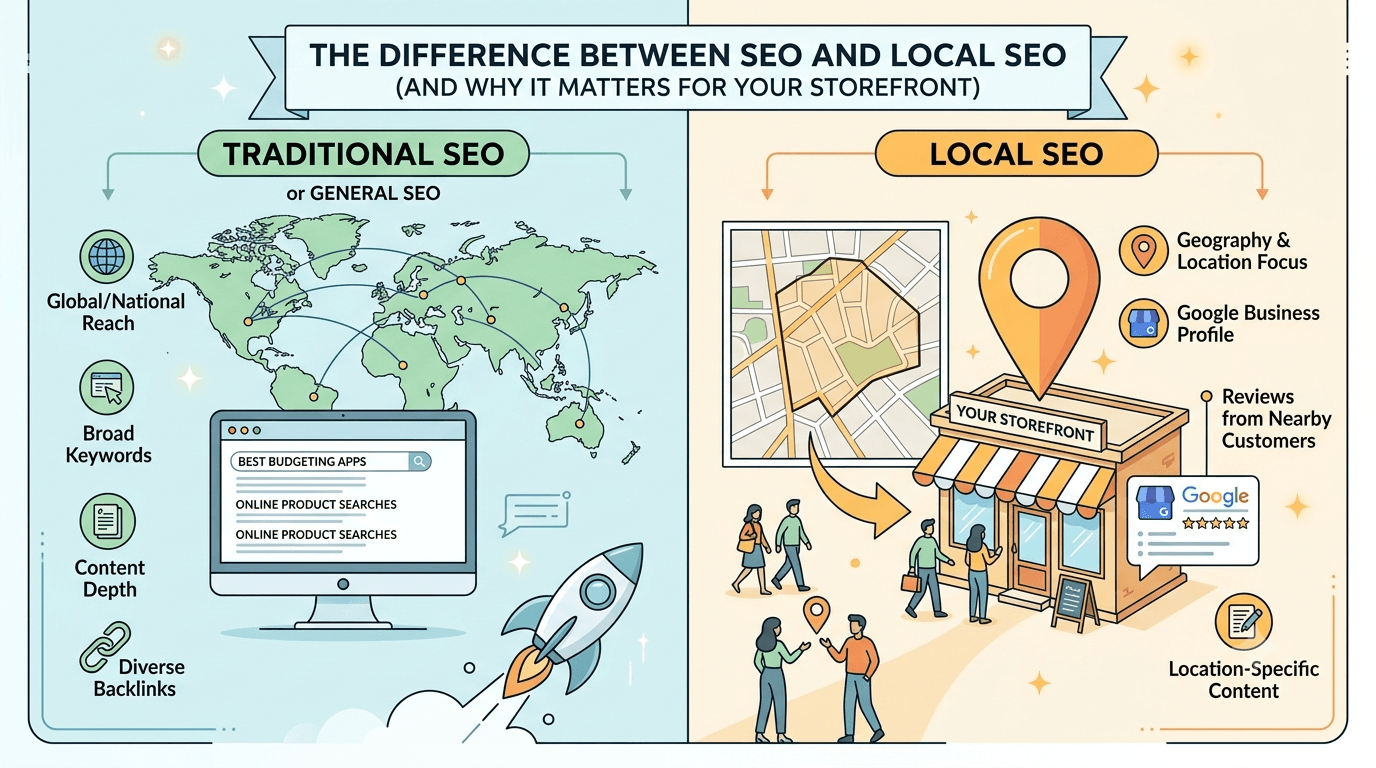
Traditional SEO is largely about ranking for topics and keywords regardless of geography. It’s the strategy behind a blog trying to rank for “best budgeting apps” or an online retailer competing for broad product searches with customers anywhere in the country.
This approach relies heavily on content depth, backlinks from a wide range of sources, and technical site performance, without much emphasis on physical location at all.
What Makes Local SEO Different
Local SEO adds geography into the equation. It centers around your Google Business Profile, consistent local citations, reviews from actual nearby customers, and location-specific content that clearly communicates where you operate and who you serve.
For a storefront business, this distinction matters enormously. Ranking for a broad, non-local keyword does nothing if the person searching lives three states away and will never visit.
Where the Two Strategies Overlap and Where They Diverge
Both approaches value quality content and genuine trust signals. But local SEO puts far more weight on things like accurate business listings, local directory presence, and location-based reviews than traditional SEO typically does.
This is where local directories genuinely earn their place. A platform like townvibelistings.com contributes directly to local SEO by reinforcing your business’s location and relevance within your specific community, something a generic backlink from an unrelated national site simply can’t replicate.
Conclusion
If your business depends on people within driving distance, local SEO deserves more attention than broad, generalized SEO strategies. Understanding the difference helps you spend your limited time and budget on the things that actually bring nearby customers through your door.
Frequently Asked Questions
Not necessarily, but priorities matter. If most of your customers come from a specific area, local SEO should take precedence. General SEO can still play a supporting role, particularly for content that answers broader questions related to your industry.
It can be more cost-effective for small, local businesses since it focuses on achievable tactics like accurate listings and genuine reviews rather than competing for highly competitive national keywords, which often require significantly more resources.
Yes, to some degree. A clear, mobile-friendly website that includes your location, service area, and contact information supports local SEO efforts, even though the biggest factors tend to be your Google Business Profile and citation consistency.
Yes. Businesses serving multiple areas can create location-specific content and maintain listings relevant to each town or region they serve, helping them appear in searches across all the areas they actually do business in.